









The Ultimate Guide to Military Medal Restoration, Cleaning, and Preservation
Table of Contents
Family military medals are far more than pieces of struck metal and silk ribbon. They are tangible links to our national history, representing the courage, sacrifice, and service of everyday Australians. Whether passed down from a relative who served in the First World War or earned during modern operations, these pieces of heirloom history deserve the utmost respect.
Unfortunately, environmental factors, poor storage choices, and well-intentioned but overly aggressive cleaning can quickly degrade these delicate items. If you have noticed tarnished surfaces, brittle fabrics, or fraying threads on your family’s military heritage, this guide covers the do's and don'ts of home care and when to call in professional medal restoration experts.
Understanding Your Medals: The First Step in Preservation
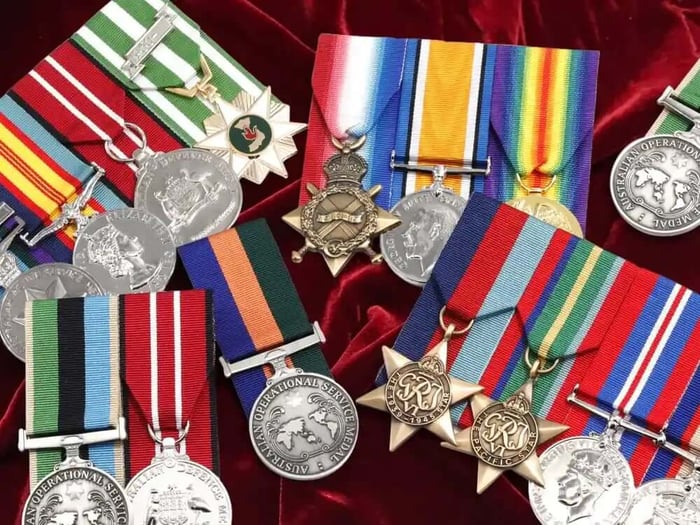
Before attempting any form of medal cleaning, it is vital to know exactly what materials you are dealing with. Australian and British Imperial medals across different eras feature an array of metal compositions:
- Silver and Cupro-Nickel: Common in campaign medals (like the 1939–1945 Star or the Vietnam Medal). They react naturally with air to form tarnish.
- Bronze and Brass: Frequently used for older bravery or commemorative decorations. They develop a dark, rich protective layer over time known as a patina.
- Gilt and Plated Finishes: Common in modern medals. These feature an incredibly thin decorative outer layer that can easily be stripped away by abrasive scrubbing.
Crucial Fact: A natural patina is a layer of historical identity. Removing it aggressively can permanently strip the fine die-struck details of the medal, lower its historical significance, and ruin the original aesthetic.
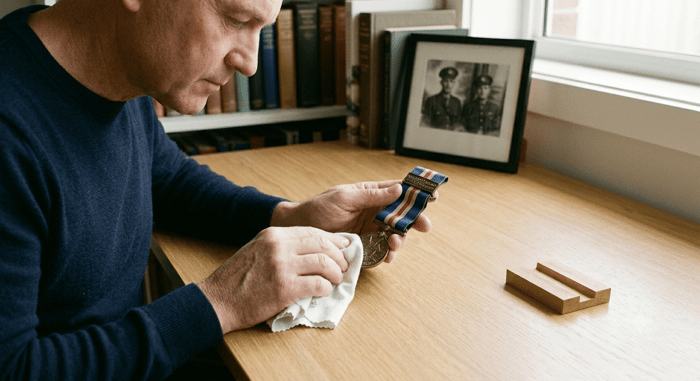
Safe Practices for Home Medal Cleaning
When it comes to handling historic military memorabilia, less is always more. The Australian War Memorial recommends a conservative approach. If you decide to clean your collection at home, prioritize gentleness over quick visual results.
Step-by-Step Dusting and Light Degreasing
For medals that are merely dusty or showing slight grease from fingerprint oils, a non-invasive physical cleaning is safest.
1.Initial Dry Dusting: Remove loose particles.
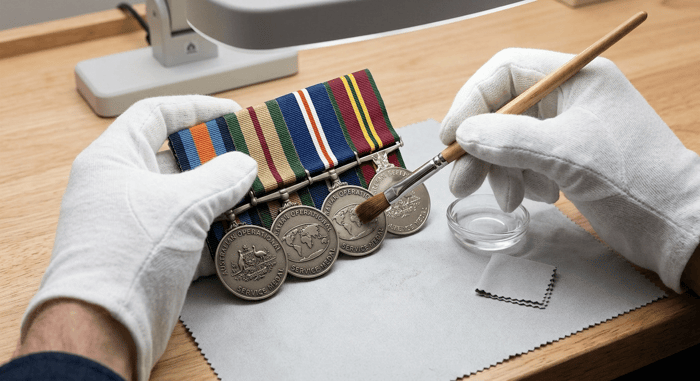
Use a soft, clean artist's paintbrush or a high-quality microfibre cloth to gently flick away dust from the fine lettering, crowns, and suspension rings. This prevents scratching the surface during later steps.
2.Prepare a Mild Solution: Avoid harsh chemicals.
Mix a tiny drop of pH-neutral, additive-free dishwashing liquid into lukewarm water. Avoid household cleaners containing ammonia, bleach, or vinegar, which pit the metal surfaces.
3.Controlled Moist Cleaning: Keep ribbons dry.
Moisten a soft child’s toothbrush or a cotton bud in the soapy solution. Flick or shake off excess moisture so it is damp, not dripping. Gently work the brush or bud in small circles across the metal parts only.
4.Rinse and Dry Immediately: Prevent water spots.
Wipe away soap residue with a fresh cotton bud lightly dampened with clean water. Immediately dry the medal using a soft cloth or a hair dryer on a strictly cool setting. Moisture left in tiny crevices can cause accelerated corrosion.
Common Cleaning Mistakes to Avoid
The fastest way to destroy the value and integrity of an heirloom is by using modern, abrasive kitchen products. Never use the following methods on original medals:
- Abrasive Metal Polishes: Commercial polishes like Brasso are highly abrasive. They function by grinding down microscopic layers of metal to achieve a high shine. Over time, frequent polishing softens the crisp edge-engraving and fine portraits.
- Bicarbonate Soda Pastes or Toothpaste: These cause microscopic scratching that is instantly visible under bright light, irrevocably altering the metal’s finish.
- Ultrasonic Cleaning Tanks: While highly effective for modern jewellery, ultrasonic waves can crack aged enamel or cause structural components to separate if a medal has hidden structural fatigue.
Managing and Cleaning Medal Ribbons
The silk and synthetic ribbons used in medal cleaning and mounting require an entirely separate approach to the metal discs themselves. Aged textile fibres are incredibly prone to dry rot, bleeding, and tearing.
Many older dyes, particularly early silk dyes from the world wars, are not colourfast and will bleed if they come into contact with water. If a ribbon is soiled, avoid washing it like common fabric. Instead, attach a thin, soft nozzle to your vacuum cleaner, cover it with a layer of open-weave medical gauze, set it to the lowest suction setting, and carefully lift loose dust away from the fabric.
If a ribbon has suffered severe oil staining, water logging, or heavy fading, the best course of action is an authentic replacement during a holistic medal restoration process.
Professional Medal Restoration and Mounting
There comes a point where DIY cleaning reaches its limits. When dealing with heavily corroded metal, damaged suspension mounts, or degraded ribbons, seeking a professional medal restoration specialist is the safest choice.
Professionals can breathe new life into family sets while adhering strictly to protocol. This often includes:
- Lacquering: Applying specialist protective lacquers (like Incralac) to clean metals to seal them from atmospheric humidity and completely prevent future tarnishing.
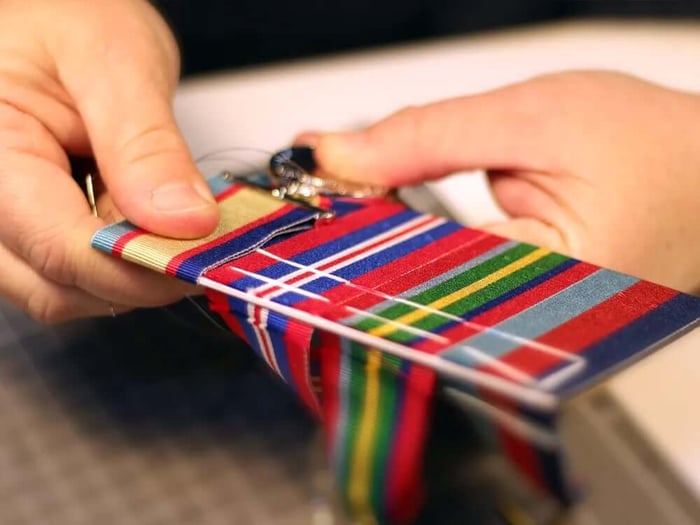
- Ribbon Replacement: Carefully sourcing historically accurate replica ribbons to replace heavily rotted originals.
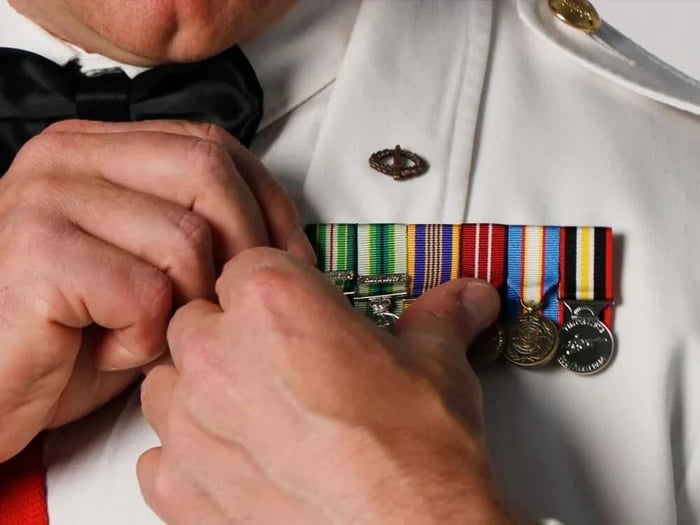
- Professional Mounting: Arranging medals into either swing mounting or court mounting styles.
Mounting Style | Description | Best For |
Swing Mounting | Medals hang freely from a single ribbon bar, allowing them to swing and gently clink together. | Traditional aesthetic, historically accurate for earlier eras. |
Court Mounting | Medals are rigidly secured to a solid backing plate, preventing movement and minimizing wear. | Enhanced protection, standard for modern Australian Defence Force (ADF) dress protocols. |
Proper Storage: Preventative Conservation
The best way to eliminate the need for harsh cleaning routines is to prioritize preventative care. Atmospheric moisture, high temperatures, and direct UV light are the primary threats to your family's collection.
Store in a Controlled Environment
Avoid keeping medals in damp areas like backyard sheds, garages, or laundry cupboards. Rapid fluctuations in temperature and relative humidity cause metals to expand and contract, which loosens mounts and degrades fabrics. Choose a central room with stable conditions.
Use Acid-Free Materials
Standard cardboard, plastics, and sticky tapes release acidic vapours as they age. This gas chemical reaction rapidly turns silver black and corrodes bronze. Always wrap loose items in acid-free tissue paper or store them in custom archival pockets.
Display Responsibly
If displaying your family honours in a shadow box or wall frame, ensure the glass features a UV-filtering coating. Direct sunlight will permanently fade the vibrant colours of a campaign ribbon in just a few years.
Honouring the Legacy with Care
Taking care of family military decorations ensures that the individual sacrifices of our veterans are preserved for generations to come. By adopting a gentle, hands-off preservation philosophy, keeping items stored safely, and relying on professional expertise for complex medal restoration and mounting work, you keep Australia’s rich military heritage alive and pristine.
FAQs
How can I safely clean tarnished military medals at home?
To safely clean tarnished medals at home, avoid commercial liquid chemical dips and harsh abrasives. Stick to a minimal approach: gently dust the surface with a soft, clean artist's brush, and use a cotton bud lightly dampened with lukewarm water and a single drop of pH-neutral, additive-free dishwashing liquid. Clean only the metal components, avoiding the ribbons entirely. Wipe off any residue with a fresh, dry microfibre cloth and dry the medal immediately using a hair dryer on a cool setting to prevent water spots and deep moisture trap.
Which products are best for cleaning and restoring bronze medals?
Bronze medals should never be scrubbed with bright-metal polishes like Brasso or homemade baking soda pastes, as these strip away the historical patina (the dark protective layer that develops naturally over time). The best product for an old bronze finish is gentle, non-reactive cleaning using a mild soap solution, followed by a very thin layer of high-quality microcrystalline wax (such as Renaissance Wax). This wax seals the surface against humidity and fingerprint oils without changing the color or chemical composition of the antique bronze.
What are the recommended products for restoring dull medal finishes?
For dull finishes on silver, cupro-nickel, or gold-plated medals, the safest products are a high-quality microfibre cloth or a specialist jeweler's rouge cloth used with very light, dry hand pressure. Avoid liquid silver polishes, which leave chalky white residues in the fine, stamped crevices of the medal. If the dullness is due to a failing old lacquer or heavy oxidation, the recommended route is to have a professional conservator clean the metal and re-coat it with a specialist, UV-stable protective lacquer like Incralac.
How can I professionally restore old medals without damaging them?
To professionally restore old medals without risking irreversible damage, pass the task to a dedicated medal mounter or military conservator. Professional restoration involves chemical stabilization of active corrosion (like green verdigris), ultrasonic cleaning of loose components only when safe, replacing deteriorated internal mounting pins, and applying museum-grade sealants. True professional restoration prioritizes conservation over making an item look "brand new," ensuring the historic integrity and edge engravings remain perfectly intact.
What is the average cost of ribbon replacement for service medals?
In Australia, the average cost to replace a damaged or rotted ribbon generally ranges from $15 to $30 AUD per medal, depending on whether the medal requires standard swing mounting or rigid court mounting. This fee typically includes the sourcing of historically accurate, high-quality replica ribbon fabric and the labor to skillfully stitch and secure the medal onto its new ribbon bar or backing board. For rare or antique Imperial ribbons, costs may vary depending on textile availability.